Insights
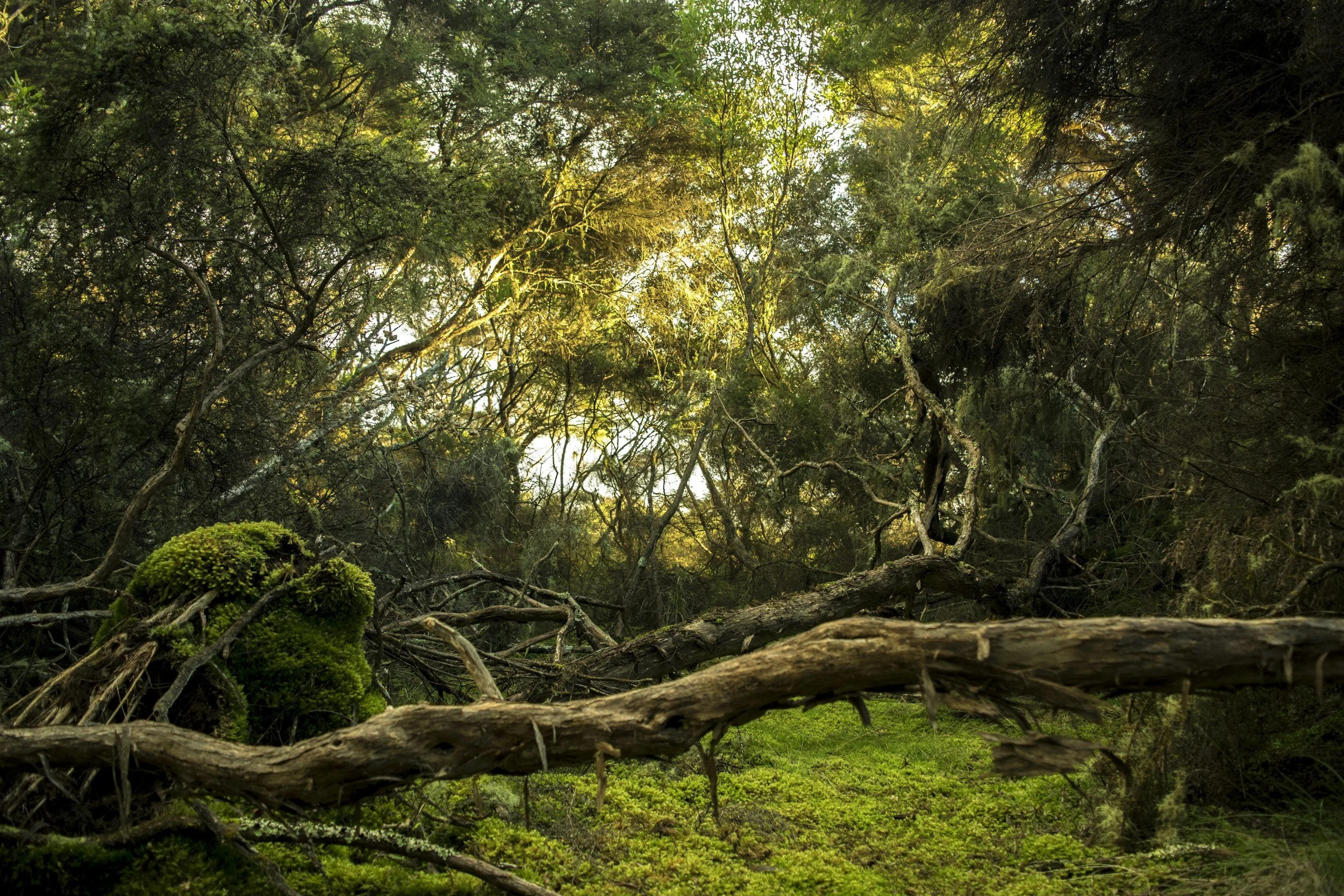
Turning Impenetrable Brush into Prime Whitetail Habitat: A Modern Approach
If you own land in Minnesota, you know the struggle: you bought your property for the peace, the timber, and the wildlife, but lately, you can’t even walk through your own woods. Common Buckthorn, Prickly Ash, and Honeysuckle have created impenetrable walls of invasive brush that choke out the native hardwoods and destroy the understory.
For hunters, this is more than just a nuisance—it’s a habitat disaster. These invasive species create "dead zones" where nothing grows on the forest floor, eliminating the mast-producing plants and browse that whitetail deer actually need to thrive.
The Conventional Method vs. The Precision Approach
Most landowners look for quick fixes. They reach for the chainsaw, the brush hog, or the herbicide sprayer. While these tools have their place, they are noisy, labor-intensive, and often cause more soil disturbance than they are worth. Worse, they frequently miss the roots, guaranteeing that the buckthorn will be back, thicker than ever, by next season.
At Northern Native Meadows, we are taking a different, more disciplined approach to land stewardship.
Precision Grazing: The Ecosystem-First Solution
We utilize targeted grazing prescriptions—deploying select herds of goats and hair sheep—to systematically reclaim land. This isn't just turning animals loose; it is a calculated, professional intervention.
Here is how our method benefits your land and your hunting success:
Selective Eradication: Our herds are biologically driven to target the invasive species you want gone. They strip the foliage of Common Buckthorn and Prickly Ash, weakening the root system and allowing native grasses and beneficial hardwoods to breathe again.
Zero Soil Disturbance: Unlike heavy machinery that tears up the forest floor and creates pathways for more invasive seeds to sprout, our grazing is gentle on the soil. It promotes native plant regeneration without the mess.
Creating "Edge" and Browse: By thinning the dense, unusable thickets, we open up the forest understory. This creates the "edge" habitat that whitetails thrive on, improving shooting lanes, travel corridors, and bedding areas.
The "Silent" Factor: Grazing is the ultimate stealth habitat management. You can improve your land’s carrying capacity without the noise and smell of tractors, which keeps local deer populations calm.
The Strategy for 2027 and Beyond
We are currently compiling technical addenda and practice codes for properties throughout the Central and North-Central Minnesota corridor. While our core operations are anchored in Aitkin, Wright, and Hubbard Counties, we maintain a strategic footprint across the Morrison, Crow Wing, and Todd County regions—areas where the intersection of high-density recreational timber and invasive species pressure is most acute.
We believe in professional land stewardship—the kind that treats your acreage with the same level of precision and respect as a mission-critical operation. We aren't just clearing brush; we are executing a long-term grazing prescription to restore the silvopasture and timber health that made these properties valuable in the first place.
Are you ready to restore the potential of your land? If you are tired of battling invasive brush and want to see what professional, livestock-based restoration can do for your whitetail habitat, we invite you to reach out. Let’s discuss a grazing prescription tailored to your property.