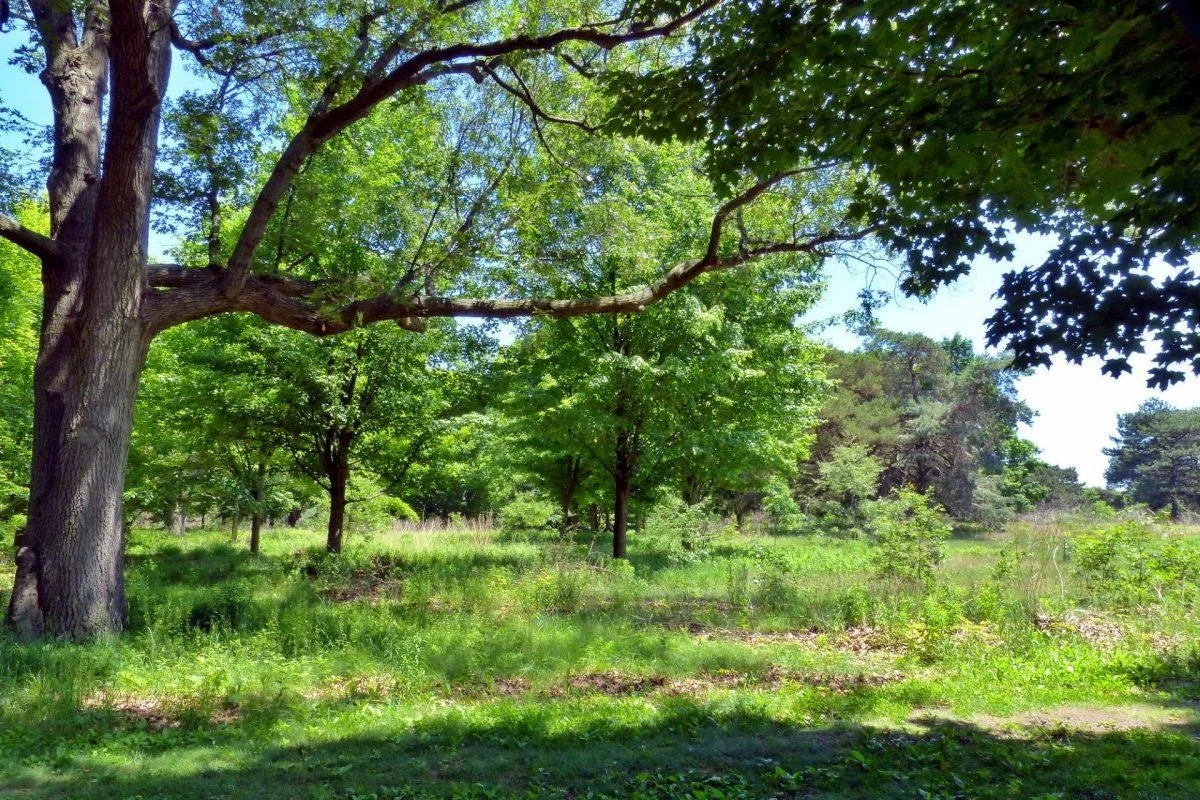
Why Cattle Aren’t the Tool for Brush Reclamation (The Reality on the Ground)
The Anatomy of Grazing vs. Browsing: Cattle are generalist grazers built primarily for grass and herbaceous forage. While they will occasionally nip soft green shoots, they lack the anatomical jaw structure and behavioral drive to strip tough, woody mid-story brush like mature Common Buckthorn, Prickly Ash, or Honeysuckle.
Compaction, Structure, and Drought Realities: Because of their sheer mass, cattle exert high ground-pressure per square inch. In delicate oak savanna soils and regenerating timber plots—such as those studied by the U.S. Fish and Wildlife Service (USFWS) at Sherburne National Wildlife Refuge—heavy trampling damages sensitive root systems and compacts fragile soils. Management observations note that these pressures are severely magnified during mild to severe drought years: as grass yields drop, cattle rapidly overgraze the moisture-stressed turf and heavily impact compromised soils while leaving invasive woody species untouched.
The Multi-Species Advantage: Effective ecological restoration requires target-specific browsing rather than generalist grazing. Goats naturally browse upward—standing on their hind legs to strip bark, leaves, and twigs from the mid-story—while hair sheep clean up the turf layer. This creates the precise vertical impact needed to open the canopy and exhaust invasive root carbohydrates naturally, without relying on lush grass swards or heavy chemical inputs.